How to Measure Cell Proliferation: Techniques & Assay Comparison
Promega Corporation
Publication date: 2026
Abstract
Cell proliferation, the process of cell growth and division, is a fundamental parameter in cell-based research. Because changes in proliferation are among the earliest indicators that a treatment is affecting cell behavior, proliferation assays are used routinely across drug discovery, cancer biology, immunology and cell therapy to screen compounds, validate targets and evaluate therapeutic responses. Five, well-established measurement approaches for cell proliferation exist: metabolic activity assays, DNA synthesis, immunodetection of proliferation markers, dye dilution and DNA content quantification. Each has distinct strengths and trade-offs in terms of throughput, specificity, workflow complexity and whether it measures proliferation directly or infers it from a surrogate readout.
No-wash luminescent immunoassays that detect the nuclear proliferation marker Ki-67 have emerged as a sixth approach, offering a reliable, proliferation-specific readout in a fast, easy add-mix-measure protocol. This guide compares each method, discusses their advantages and limitations, and provides a framework for selecting the best assay for your experimental needs.
Why Is Measuring Cell Proliferation Important?
At the most basic level, monitoring proliferation is part of routine cell culture: confirming expected doubling times, tracking growth consistency across passages and flagging potential issues such as genetic drift, phenotypic change or contamination. Beyond routine culture maintenance, proliferation is also one of the most common experimental readouts in cell-based research because it informs on how cells are responding to their environment; a drug treatment, a genetic perturbation, a growth factor stimulus or a change in culture conditions.
Drug discovery and toxicology
Proliferation assays are workhorses in early drug screening. They show whether a compound inhibits cell growth and help rank hits for further development. Screening against antiproliferative targets depends on reliable proliferation readouts to triage compounds quickly. Proliferation assays also play a central role in safety and toxicology profiling, where they monitor whether drug candidates have unintended effects on cell growth in non-target cell populations.
Targeted therapeutics and biologics
Targeted protein degradation, or using PROTACs or molecular glues to selectively destroy disease-causing proteins, is one of the fastest-growing areas in drug discovery. Proliferation assays confirm that degrading the target protein translates into a functional cellular outcome: cells stop growing. Similarly, antibody-drug conjugates (ADCs) that deliver cytotoxic payloads to specific cell types rely on proliferation readouts to verify that the payload is reaching its target and stopping those cells from dividing. In both cases, proliferation is the downstream confirmation that the therapeutic mechanism is working as intended.
Immunology and cell therapy
Lymphocyte proliferation, particularly T-cell activation and clonal expansion, is a key measure of immune function. In immuno-oncology, proliferation matters on both sides of the equation: researchers want tumor cells to stop proliferating and immune cells to start. Proliferation assays are used to quantify T-cell activation, assess CAR-T cell expansion during manufacturing and screen immune modulators for their ability to enhance or suppress immune cell growth.
Cancer biology and mechanistic studies
Uncontrolled proliferation is a defining hallmark of cancer. Measuring how fast tumor cells divide, how they respond to therapy, and whether oncogenic mutations (such as those in the RAS pathway) drive accelerated growth are central questions in oncology research. Beyond cancer, proliferation assays are used to dissect the molecular pathways that govern cell division, including cell cycle regulation, growth factor signaling and checkpoint controls.
How Does Cell Proliferation Differ from Cell Viability?
Proliferation refers specifically to cells actively dividing: progressing through the cell cycle and producing daughter cells. Viability indicates that cells are alive and metabolically active. Many commonly used “proliferation assays” actually measure viability (live cell number) and infer proliferation from changes in that number over time. This approach assumes that viability signal is proportional to cell number — an assumption that holds in many routine experiments. However, certain experimental conditions can break that assumption. Treatments that arrest the cell cycle without killing cells, for example, leave viability signals largely unchanged even though proliferation has stopped. When the question is specifically whether cells are dividing, rather than whether they are alive, an assay that directly measures a parameter of cell division will give a more definitive answer.
Choosing an assay that matches the biological question you are asking is essential for generating meaningful data, but the question isn't the only factor. Throughput requirements and available instrumentation also shape which method is practical for your lab. The sections below compare five established categories of proliferation assays plus a newer no-wash luminescent immunoassay approach. At the end of this guide, we provide a framework for weighing these factors together to choose the assay that works best for you.
How Do Metabolic Activity Assays Measure Cell Proliferation?
Metabolic activity assays are the most widely used approach for estimating cell proliferation in plate-based formats. They measure enzymatic activity in live cells as an indirect proxy for the number of viable, metabolically active cells in a well. Typically, this involves the reduction of a substrate by mitochondrial dehydrogenases or related enzymes. In most assays, a reagent is added to cells in culture and live cells enzymatically convert the reagent into a detectable product. The major subcategories of metabolic activity proliferation assays are:
Tetrazolium reduction assays (MTT, MTS, XTT, WST-1):
Living cells reduce tetrazolium salts via NAD(P)H-dependent dehydrogenases to produce colored formazan products. MTT forms an insoluble purple formazan requiring a solubilization step; MTS and WST-1 yield soluble products that can be read directly. Our CellTiter 96® AQueous One Solution Cell Proliferation Assay (MTS) provides a convenient one-step add-incubate-read colorimetric protocol, while the CellTiter 96® Non-Radioactive Cell Proliferation Assay offers an MTT-based option.
Resazurin reduction assays:
The blue, non-fluorescent dye resazurin is reduced by viable cells to pink, fluorescent resorufin. CellTiter-Blue® Cell Viability Assay uses this approach and is compatible with fluorescence or absorbance readouts.
ATP-based bioluminescent assays:
These use the firefly luciferase reaction, where light output is directly proportional to ATP content—and therefore to the number of viable cells. CellTiter-Glo® Luminescent Cell Viability Assay is the most widely cited assay in this class, offering extremely high sensitivity, broad dynamic range, and a simple add-mix-read protocol.
Real-time metabolic assays:
RealTime-Glo™ MT Cell Viability Assay uses a non-lytic, continuous-read luminescent chemistry that enables kinetic monitoring of cell viability over hours or days—in the same wells, without sacrificing samples at each time point.
Advantages
- Simple, often homogeneous (add-and-read) protocols
- High throughput: compatible with 96-, 384- and 1536-well formats
- High sensitivity (especially ATP-luminescent assays)
- No specialized equipment beyond a plate reader
- Cost-effective
- Some formats allow non-destructive kinetic monitoring
Limitations
- Indirect: measures metabolism, not cell division itself
- Can be confounded by changes in per-cell metabolic activity (e.g., compounds that affect mitochondrial function or ATP metabolism)
- Cannot distinguish cytostatic (growth arrest) from cytotoxic effects
- Most formats are endpoint (lytic), except continuous-monitoring variants
Note on CDK inhibitors: Cells treated with CDK4/6 inhibitors stop dividing but often continue to grow in size, maintaining or even increasing metabolic activity. In these cases, metabolic activity assays may show no decrease, or even an increase, in signal, masking the antiproliferative effect (learn more about this concept in our blog). A readout more directly tied to proliferative state (such as a Ki-67 marker assay, DNA synthesis, or DNA content) will detect the antiproliferative effect that metabolic assays can miss. This scenario is particularly relevant in oncology drug screening as CDK inhibitors are a common therapeutic class.
Best Suited For:
General viability screening; high-throughput drug discovery; routine cell culture monitoring; applications where viability and proliferation are tightly coupled; cost-sensitive, high-volume experiments.
What Are DNA Synthesis-based Approaches to Measuring Proliferation?
DNA synthesis assays directly measure the production of new DNA during S-phase, making them specific for cells that are actively replicating their genomes. These assays incorporate labeled nucleoside analogs into newly synthesized DNA, then detect the incorporated label.
The three types of DNA synthesis assays are:
[³H]-Thymidine incorporation: The classic gold standard. Cells incorporate radioactive thymidine during DNA replication; the amount of radioactivity in harvested DNA is measured by scintillation counting. While highly sensitive, radioactive handling and disposal requirements have driven a shift toward non-radioactive alternatives.
BrdU (5-bromo-2′-deoxyuridine): A thymidine analog incorporated into replicating DNA. After a labeling period, cells are fixed and the incorporated BrdU is detected with an anti-BrdU antibody. Detection requires DNA denaturation (to expose the BrdU epitope) followed by antibody staining, a multi-step protocol.
EdU (5-ethynyl-2′-deoxyuridine): A newer thymidine analog detected by copper-catalyzed click chemistry rather than antibodies. This eliminates the need for DNA denaturation, resulting in faster staining with lower background.
Advantages
- Direct measure of DNA replication, specific for dividing cells
- Single-cell resolution by microscopy or flow cytometry
- Can be combined with cell cycle DNA stains for phase analysis
- EdU click chemistry offers faster detection than BrdU
- Well-established, widely published methods
Limitations
- Multi-step protocols: fixation, permeabilization, staining, washes
- Labor-intensive; less amenable to high-throughput screening
- Endpoint only, cells are fixed and cannot be reused
- BrdU requires harsh DNA denaturation for antibody access
- Radioactive formats ([³H]-thymidine) require special handling
- Pulse timing must be optimized to capture S-phase window
Best Suited For:
Confirming cell cycle arrest (S-phase entry); immunology experiments measuring lymphocyte proliferation; studies requiring single-cell resolution of which cells divided; combining proliferation data with cell cycle phase analysis by flow cytometry; microscopy-based spatial proliferation studies in tissues.
How Is Immunodetection Used to Assess Cell Proliferation?
Rather than labeling newly synthesized DNA, this approach detects endogenous proteins that are specifically expressed in proliferating cells. The most widely used marker is Ki-67, a nuclear protein present in all active phases of the cell cycle (G1, S, G2 and M) but absent in quiescent (G0) cells. Other markers include PCNA (proliferating cell nuclear antigen) and phospho-histone H3 (Ser10), which marks cells in mitosis.
Cells or tissue sections are fixed, permeabilized and incubated with a primary antibody against the proliferation marker. A labeled secondary antibody then enables detection by microscopy, flow cytometry or enzyme-linked immunoassay.
Advantages
- Specific to proliferating cells (Ki-67 is absent in G0)
- No exogenous label needed, detects natural protein expression
- Provides spatial context in tissue sections (IHC)
- Can be multiplexed with other markers (cell type, activation state)
- Applicable to both cultured cells and tissue samples
Limitations
- Multi-step: fix, permeabilize, block, antibody incubations, washes
- Endpoint method, requires cell fixation
- Low throughput (microscopy) or moderate throughput (flow)
- Antibody quality and staining consistency affect results
- Semi-quantitative without automated image analysis or flow
Best Suited For:
Identifying which cells in a mixed population are proliferating; combining proliferation with phenotypic markers by flow cytometry; validating cell cycle exit or entry in mechanistic studies: tissue section analysis where spatial context matters.
How Can Dye Dilution and Generational Analysis Be Used to Measure Cell Proliferation?
Dye dilution assays are the method of choice when researchers need to know how many times individual cells have divided. By labeling cells with a fluorescent dye that partitions equally between daughter cells at each division, flow cytometry can resolve discrete generations within a population.
How They Work
Cells are loaded with a stable fluorescent dye, commonly CFSE (carboxyfluorescein succinimidyl ester) or CellTrace™ Violet, that binds covalently to intracellular proteins. As cells divide, each daughter inherits approximately half the dye, producing a halving of fluorescence intensity per generation. After culture under experimental conditions, cells are analyzed by flow cytometry. The resulting histogram shows a series of peaks, each representing one additional round of division.
Advantages
- Resolves individual generations (typically 6–8 divisions)
- Single-cell resolution of division history
- Reveals heterogeneity: which cells divided and how many times
- Can be combined with surface markers to identify proliferating subsets
- Standard in immunology for T-cell activation and clonal expansion studies
Limitations
- Requires a flow cytometer and expertise in flow analysis
- Not plate-reader compatible, lower throughput than plate-based assays
- Dye concentration must be optimized (too much is toxic; too little gives poor resolution)
- Fluorescence fades below detection after many divisions
- Forward-tracking only: cells must be labeled before the experiment
Best Suited For:
T-cell activation and lymphocyte proliferation studies; tracking clonal expansion in heterogeneous immune cell populations; cell therapy manufacturing QC (assessing expansion capacity); any experiment where the number of divisions per cell is the key question; combining division tracking with immunophenotyping by flow cytometry.
Each of the methods described above involves a trade-off. Metabolic assays are simple and scalable but infer proliferation from viability. DNA synthesis assays are specific to dividing cells but require multi-step protocols that limit throughput. Immunodetection of Ki-67 or other proliferation markers provides a direct readout of proliferation, but demands fixation, staining and specialized instrumentation. Dye dilution resolves individual generations but requires a flow cytometer and cannot be run in plate format.
For researchers who need a proliferation-specific readout but also need the speed and scalability of a plate-based workflow, a newer approach makes it possible to detect hKi-67, the same established proliferation marker used in immunodetection, in a homogeneous no-wash format that is complete in under two hours.
How Can a No-Wash Ki-67 Detection Assay Assess Proliferation?
As noted in the sections above, each established proliferation method involves a trade-off between specificity, workflow complexity and throughput. The Lumit® Cell Proliferation Assay (Human Ki-67) was designed to address these trade-offs by delivering a reliable, proliferation-specific readout in a fast, no-wash plate-based format.
How It Works
The assay uses two antibodies against human Ki-67, each conjugated to a complementary fragment of a split luciferase (NanoBiT® technology). When both antibodies bind hKi-67 protein in a cell lysate, the luciferase fragments reconstitute, producing a luminescent signal proportional to hKi-67 levels. Because signal is generated only when both antibody fragments are brought into proximity by the target, no wash steps are needed to separate bound from unbound antibodies. The workflow is add-mix-measure: lyse cells, add the antibody-substrate reagent and read luminescence on a standard plate reader.
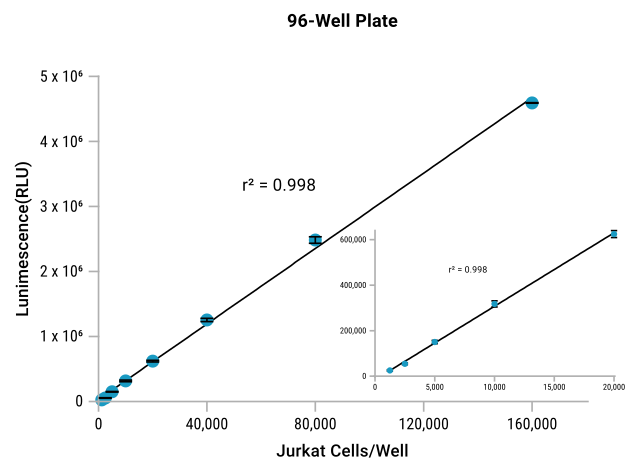
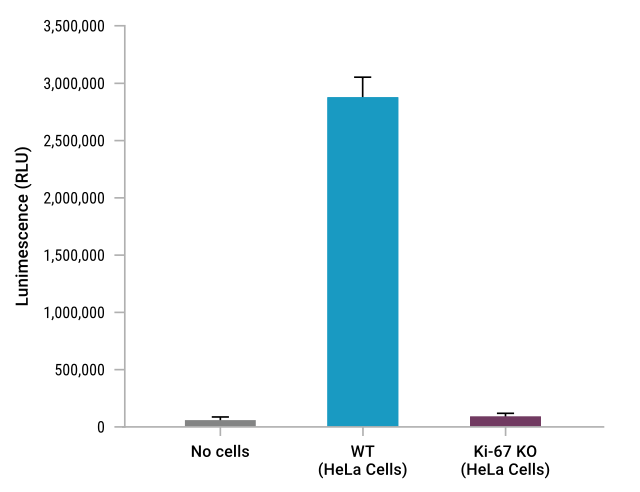
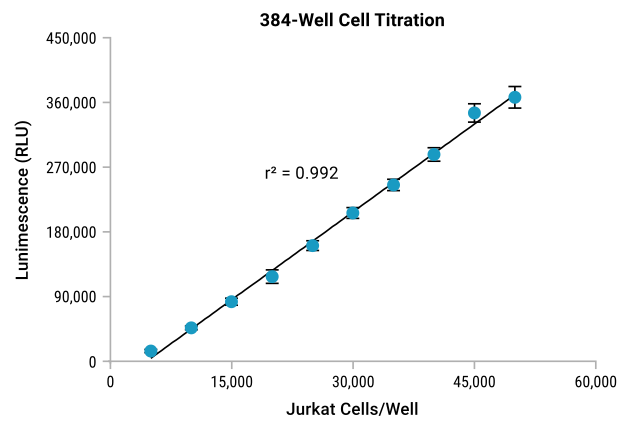
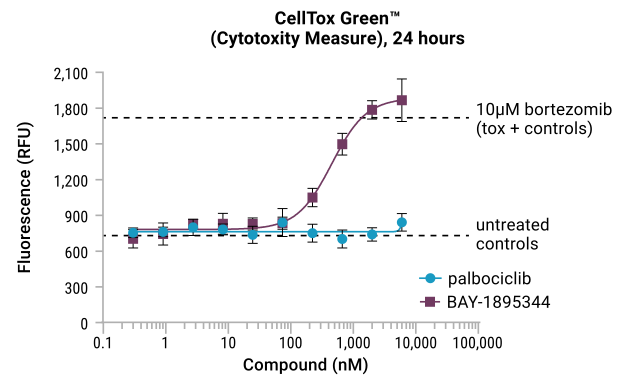
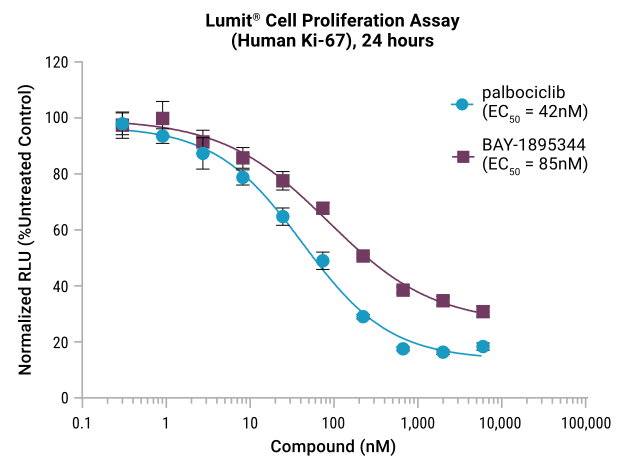
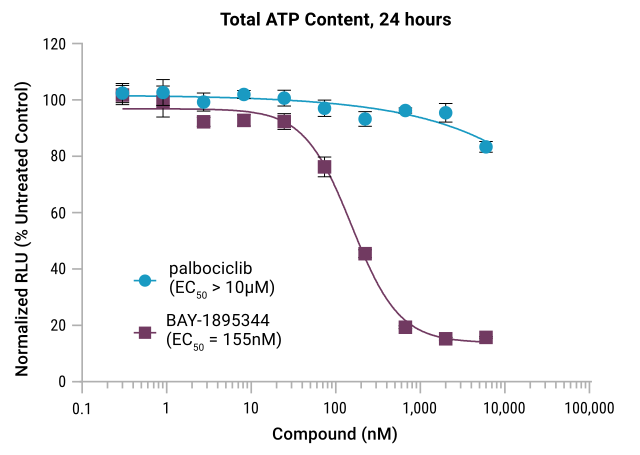
Figure 2. Measure Decreases in Cell Proliferation. Treatment of Jurkat cells (10,000/well, 384-well plate, ¼ standard 96-well volumes) with increasing concentrations of compounds. Both compounds reduced hKi-67 expression levels in a dose-dependent manner; however, BAY-1895344 induced cytotoxicity. Palbociclib produced a large change in hKi-67 levels without causing cytotoxicity after only 24 hours of treatment, enabling earlier assessment of compound effects on proliferation. Palbociclib’s effect appears minimal based on total ATP content.
Advantages
- Proliferation-specific: hKi-67 is present only in actively cycling cells
- No wash steps, homogeneous add-mix-read format
- Results in under 2 hours; minimal hands-on time
- Independent of metabolic state; not confounded by metabolic shifts
- Pronounced signal changes at early time points
- Standard plate reader (luminescence), no flow cytometer or microscope required
- Compatible with 96- and 384-well formats for screening
- Can be multiplexed with a membrane-integrity dye to distinguish antiproliferative from cytotoxic effects
Limitations
- Bulk measurement (average Ki-67 per well), no single-cell data
- Endpoint: requires cell lysis
- Does not report number of divisions (only proliferative state)
Best Suited For:
Screening compounds for antiproliferative activity and evaluating proliferative responsiveness to stimulatory agents; confirming cell cycle arrest in mechanism-of-action studies; quantifying T-cell proliferation in a plate-based format; detecting early proliferation changes before cell number diverges; replacing labor-intensive protocols; complementing viability assays to distinguish cytostatic vs. cytotoxic responses.
Assay Comparison Table
The table below provides a side-by-side comparison of the five established proliferation assay categories plus the luminescent hKi-67 immunoassay. Use it to quickly identify which method best matches your experimental requirements.
| Method | What It Measures | Wash Steps | Time | Throughput | Equipment |
|---|---|---|---|---|---|
| Metabolic Activity (MTT, MTS, ATP, resazurin) | Enzymatic activity / ATP of viable cells, reducing potential | None | 10 min – 4 h | High | Plate reader |
| DNA Synthesis (BrdU, EdU, [³H]-thymidine) | New DNA in S-phase cells | Multiple | 4 – 8 h | Low – moderate | Plate reader, microscope or flow cytometer |
| Immunodetection (Ki-67 IHC/ICC, PCNA, pH3) | Proliferation-associated proteins | Multiple | 6 – 24 h | Low | Plate reader, microscope or flow cytometer |
| Dye Dilution (CFSE, CellTrace™) | Division count per cell (dye halving) | Initial label wash | Days + 1 h analysis | Low – moderate | Flow cytometer |
| DNA Content (CyQUANT, PI staining) | Total DNA per well (proxy for cell number) | Varies | 1 – 3 h | Moderate-high | Plate reader or flow cytometer |
| Lumit® Cell Proliferation Assay (Human Ki-67) | hKi-67 protein in cell lysate | None | < 2 h | High | Plate reader |
Which proliferation assay is right for your experiment?
No single assay is ideal for every situation. The best choice depends on what you need to learn, the scale of your experiment, and the equipment available. With six distinct approaches available, the decision comes down to your specific experimental needs. The framework below can help narrow the choice.
Start with the biological question
If you need a general viability/cytotoxicity readout—a first-pass assessment of whether cell health has been affected—a metabolic or ATP-based assay is usually the simplest and most scalable choice. If you need a proliferation specific readout or to confirm cell cycle arrest , a direct proliferation marker (Ki-67 immunoassay, BrdU/EdU) provides more specific information. If you need to track individual cell divisions, dye dilution with flow cytometry is the most informative approach.
Consider throughput and workflow
High-throughput screens demand homogeneous, sensitive, plate-based assays. Metabolic assays and luminescent Ki-67 assays both fit this requirement. DNA synthesis assays and immunodetection are better suited to focused experiments with fewer conditions. Flow cytometry-based methods occupy a middle ground: moderate throughput with rich per-cell data.
Match to available equipment
If your lab has a plate reader but not a flow cytometer, plate-based assays (metabolic, ATP, luminescent Ki-67) are the practical choice. If you have flow cytometry capability and need multi-parameter data, combining CFSE with surface markers or intracellular Ki-67 staining unlocks detailed immunophenotyping.
Use complementary assays for a complete picture
In practice, many researchers use two or more assays together. A common strategy is to screen with a fast viability assay (such as CellTiter-Glo®), then follow up on hits with a direct proliferation readout (such as a Ki-67 immunoassay or BrdU incorporation) to determine whether the effect is cytostatic, cytotoxic, or both. Multiplexing a Ki-67 assay with a membrane-integrity dye is another powerful approach for distinguishing the mechanism of growth inhibition in a single experiment.
Conclusion
Each method in this guide offers a different balance of specificity and workflow complexity. As cell-based research moves into more complex models and higher-throughput workflows, the demands on proliferation assays will only increase. Choosing a method that is specific, scalable and simple sets a stronger foundation for the experiments ahead.


Tools for Every Cell Health Question
See our complete cell health portfolio, including the Lumit® Cell Proliferation Assay (Human Ki-67).